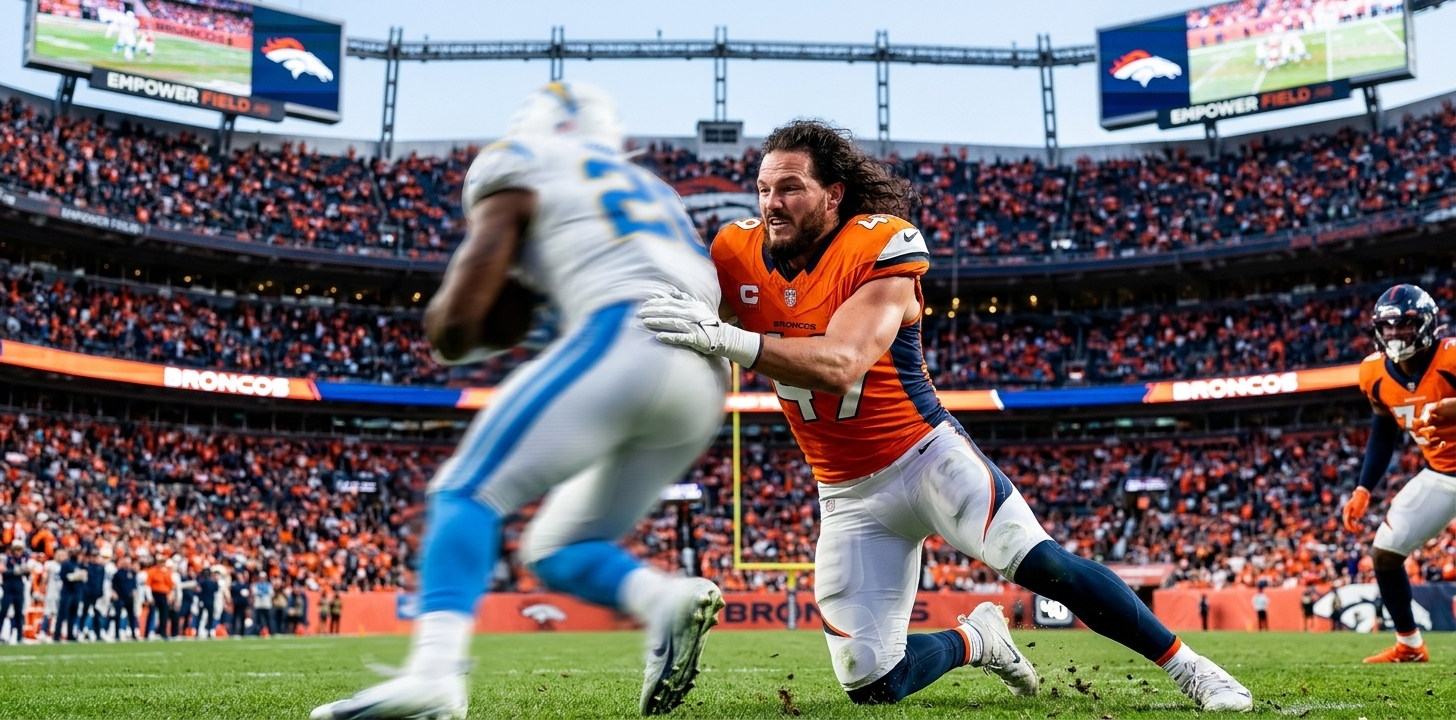
There’s something a little strange about watching an NFL game, seeing a hard hit go unflagged, and then learning a few days later that the league thinks it crossed the line. That’s what happened after the Denver Broncos’ Week 6 game against the Seattle Seahawks. Denver linebacker Alex Singleton was fined for his hit on quarterback Sam Darnold, while Seattle’s Mike Morris and Ty Okada also received fines for plays during the game.
The money gets the headlines. But I think there’s a more interesting question here: How does a player know when playing aggressively has gone too far? Football asks a lot of its defenders. Get to the quarterback. Stop the runner. Make the tackle. Don’t give the other team an easy yard. Players are praised for being physical, and coaches want them to play with an edge.
Then comes the difficult part. There’s a difference between playing hard and making contact the league considers illegal. And sometimes, that distinction isn’t obvious until the game is over.
NFL Fines Are a Tough Lesson when the Price Arrives Days Later
Singleton is appealing his fine, according to 9News reporter Mike Klis. That’s his right, and a fine doesn’t automatically mean a player intended to hurt somebody. But the league has to draw boundaries, particularly when hits involve the head or neck.
There’s another wrinkle. The plays involving Morris and Okada weren’t flagged during the game either. The league reviewed them afterward and decided fines were warranted.
From a fan’s perspective, that can be frustrating. We want consistency. If a play deserves punishment, why wasn’t it called when it happened? And if officials miss something, how much confidence should players have that they understand exactly where the boundary sits?
Of course, the league can’t catch everything in real time. That’s why reviewing plays afterward matters. But the process works best when players understand the standard and can see it being applied consistently.

So, What Do These Fines Mean Going Forward?
I also wonder what this means for the next game. A defender shouldn’t have to stop playing physically because he’s worried about a fine. But he does need to know how to make a strong tackle without putting himself, or the player he’s tackling, at unnecessary risk.
That’s part of becoming a smarter veteran, too. The goal shouldn’t be to take the toughness out of football. It’s to make sure toughness doesn’t become an excuse for a dangerous play.
And that might be the bigger lesson from a handful of fines: being a good defender isn’t just about how hard you hit. It’s about knowing how to make the play properly when the game is moving at full speed.
Related: The Rams May Have Found a Cowboys’ Receiver Worth Calling About