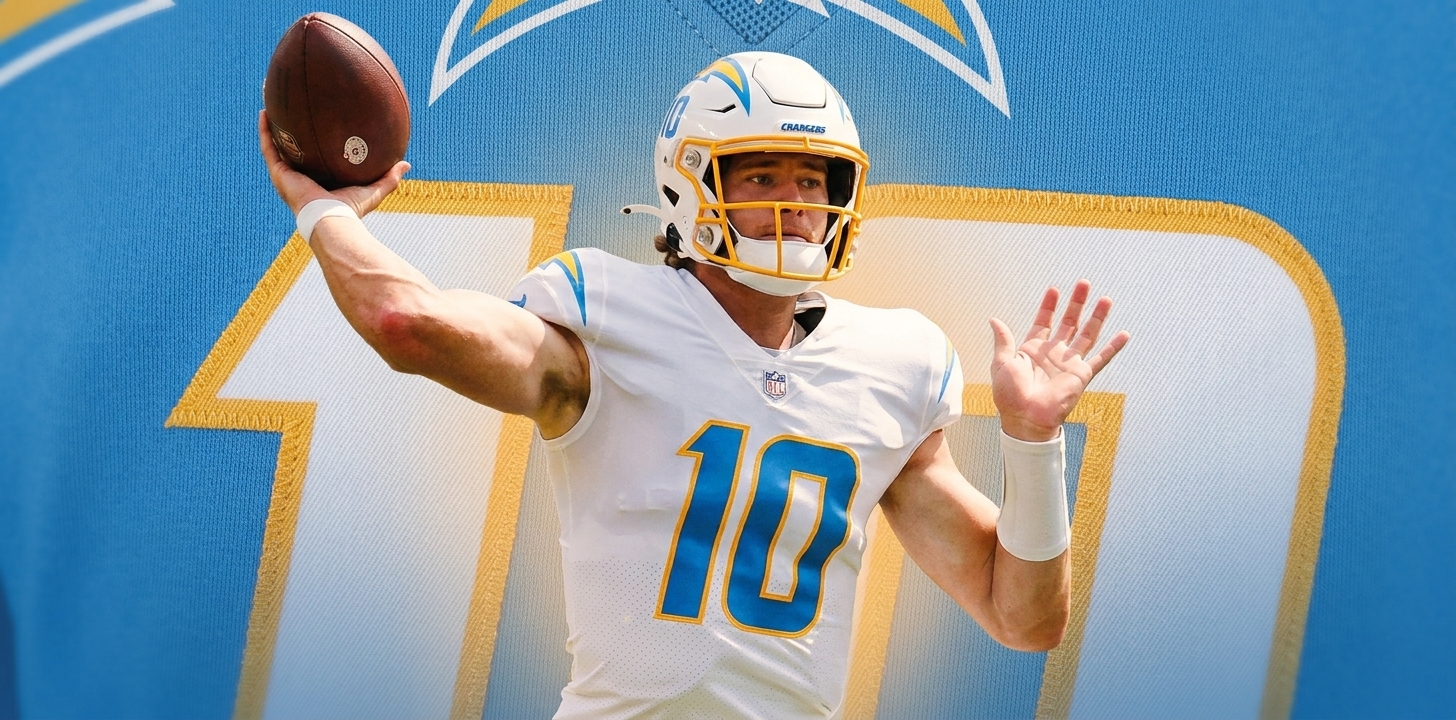
Justin Herbert’s numbers make it easy to assign blame. The Los Angeles Chargers are 0–4, and their franchise quarterback has thrown six interceptions through four games. Herbert has also been sacked 12 times, with both numbers tied for second-most in the NFL.
Those are ugly numbers for a quarterback expected to lead a playoff contender. But watch the Chargers play, and the picture gets considerably more complicated. Herbert deserves some of the blame for Los Angeles’ winless start, but the offensive line, defense, and coaching staff haven’t exactly made his job easy.
Justin Herbert Hasn’t Been Good Enough
Herbert isn’t an innocent bystander. His first pass against Seattle went directly to a defender, and he threw another interception later in the first half. Los Angeles fell behind 20–6 by halftime, with Herbert completing just five passes for 36 yards. He was considerably better as the Chargers fought back in the second half. Herbert made several monster throws as Los Angeles cut a 21-point deficit to seven and eventually got the football back with an opportunity to tie the game.
Then he held the ball too long. Herbert took a short drop, the protection broke down and Uchenna Nwosu stripped him to end the comeback. Herbert was playing behind backup tackles by that point, but that should have made getting the ball out quickly even more important.
Six interceptions in four games can’t simply be blamed on offensive linemen. Herbert has made mistakes, and some have come at critical moments. The problem is that Los Angeles isn’t giving him much margin for error.
The Chargers Need to Move the Pocket
The protection problem against Seattle was impossible to ignore. Herbert was pressured on a staggering 55% of his dropbacks, the second-highest rate he has faced since the beginning of last season. Seattle sacked him four times, with a fifth wiped out by penalty. Injuries only made the situation worse. Rashawn Slater suffered a high ankle sprain, Joe Alt left with a neck injury and Trevor Penning was evaluated for a concussion. Starting center Tyler Biadasz had already been lost for the season.
There isn’t a play call that can make those injuries disappear, but Mike McDaniel can change how defenses attack the replacement linemen.
The Chargers already use plenty of motion and play action. They also showed some effective looks from 21 personnel against Seattle. What they didn’t appear to use very often were designed rollouts that deliberately changed Herbert’s launch point.
That may need to change. Bootlegs and moving pockets won’t fix the offensive line, but they can prevent edge rushers from attacking the same spot every snap. Herbert is athletic enough to threaten defenses outside the pocket, and moving him could buy inexperienced tackles some help against aggressive pass rushers.
With backup tackles trying to survive against NFL edge rushers, McDaniel may need to stop leaving his quarterback in such a predictable location.
Herbert Isn’t the Only Problem in Los Angeles
The Chargers’ defense also deserves some scrutiny, although Seattle’s 30 points don’t tell the entire story. Four Los Angeles turnovers repeatedly gave the Seahawks favourable situations, while the Chargers also committed 16 penalties for 130 yards.
Still, a good defense occasionally has to rescue a struggling offense. Seattle ran for 138 yards and built a 27–6 lead early in the third quarter before Herbert and the offense finally started climbing back into the game. The Chargers have repeatedly put their defense in difficult situations, but the defense hasn’t consistently bailed them out either.
That’s what makes Los Angeles’ 0–4 start difficult to pin on one player. Offensive mistakes put pressure on the defense, defensive failures create obvious passing situations, and a battered offensive line makes those situations even harder for Herbert to overcome.
How Much Blame Does Herbert Deserve?
Herbert hasn’t played well enough. Six interceptions through four games are too many, and the final strip sack against Seattle showed that pressure doesn’t explain every mistake. His 59.7% completion rate and four touchdown passes through four games are well below what Los Angeles needs from its franchise quarterback.

But Herbert was also battered throughout Sunday’s game and still helped drag Los Angeles back from a 21-point deficit. At times in the fourth quarter, he made the kind of throws that remind everyone why the Chargers built their franchise around him.
Meanwhile, questions are already reaching McDaniel. Jim Harbaugh publicly backed his offensive coordinator after Sunday’s loss, saying his job is “not in jeopardy.” At 0–4, however, the Chargers clearly need something to change.
Herbert needs to play better, the defense needs to provide more support, and McDaniel needs to adapt his offense to a depleted line. That could mean quicker concepts, additional protection and, particularly, more deliberate attempts to change Herbert’s launch point.
The Chargers don’t need to decide who deserves the most blame. They need to stop asking Herbert and a depleted offensive line to solve the same problem the same way.
Next: Why Did the Giants Give Up on Odell Beckham Jr. So Quickly?