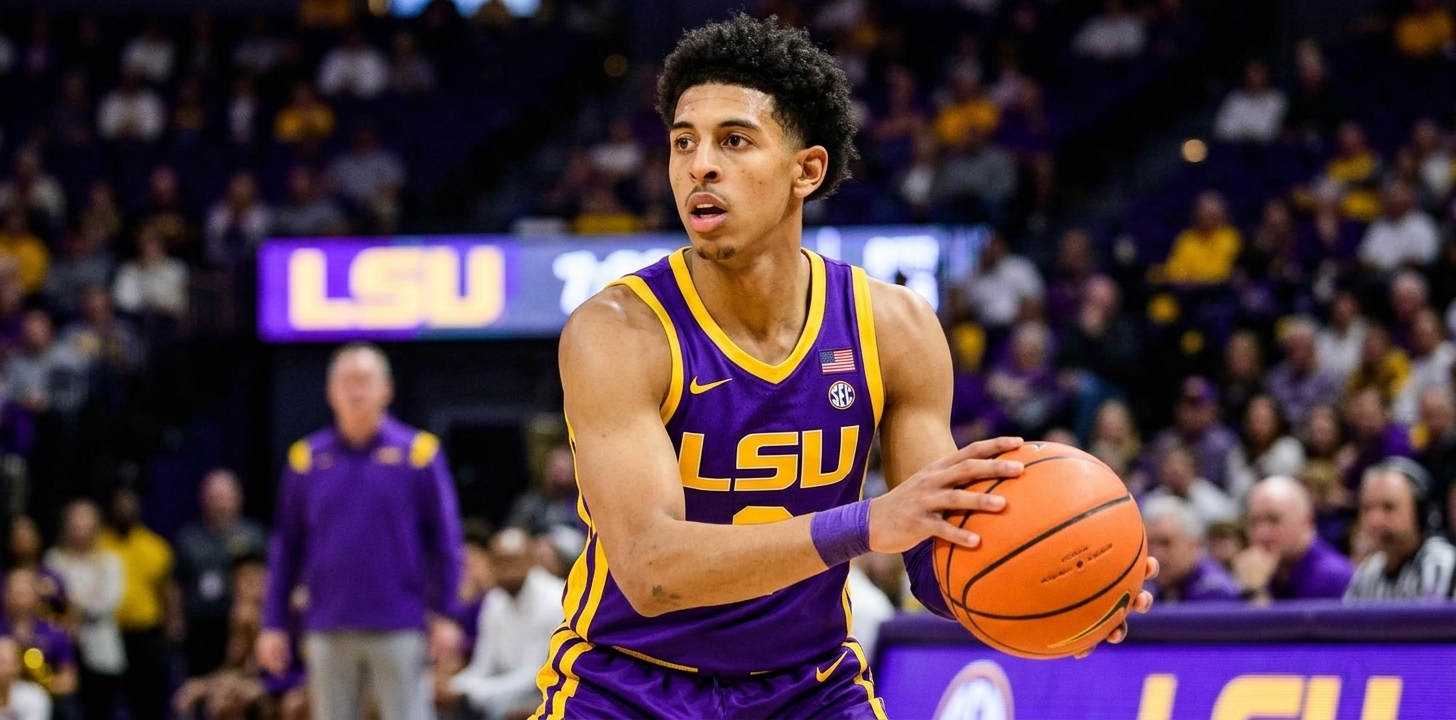
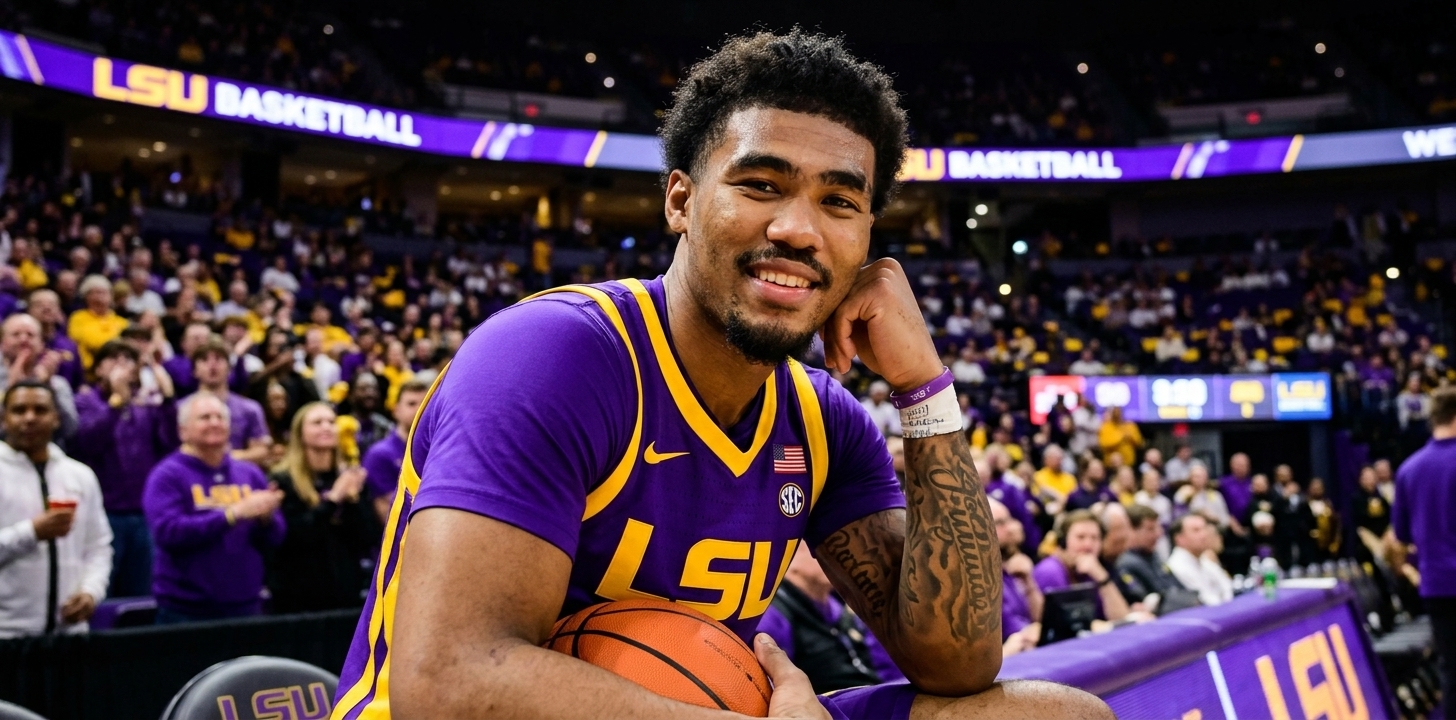
College basketball may have won another round in its growing eligibility battle, but the RJ Luis situation raises a much bigger question. How much professional experience should a player be allowed to have before college basketball closes its door to him?
For now, LSU has reason to be happy. The SEC has agreed to follow a judge’s preliminary injunction and won’t punish the Tigers for putting Luis on their 2026-27 roster. That clears an important hurdle for LSU, although the legal fight between the conference and the university isn’t over.
Luis is an interesting case. He was the Big East Player of the Year at St. John’s in 2024-25, declared for the NBA Draft, went undrafted and signed a two-way contract with Utah. He eventually landed with Boston and appeared in three preseason games. Now, at 23, he’s looking at another opportunity in college basketball.
When Does College Basketball Stop Being College Basketball?
The SEC isn’t simply making up rules to inconvenience LSU. Conferences generally want consistency in determining who is eligible to play. If one school can bring in former professional players while another follows a stricter interpretation, there’s an obvious competitive concern.
But college basketball has changed dramatically. NIL money, transfer opportunities and players moving through the sport with professional ambitions have made the old distinction between college and professional basketball much less straightforward.
That’s why the Luis situation matters. He’s not a player who spent several years in the NBA and then decided to return to college. His professional experience was relatively brief. Should that automatically end his college career? I suspect plenty of fans will have different opinions about that.

LSU Gets a Boost, But the Bigger Question Remains
There’s also a basketball reason to pay attention. LSU is off to a 4-0 start and has already picked up an impressive win over Gonzaga. Luis averaged 18.2 points and 7.2 rebounds at St. John’s last season. Adding a 6-foot-7 guard with that kind of production could make a real difference.
For LSU, this isn’t just about winning a court battle. It’s about potentially adding an established player who could help the team compete in the SEC. But the legal uncertainty remains, and the conference hasn’t abandoned its position.
What happens next? College basketball can’t keep changing the way it operates while expecting every eligibility question to have an easy answer. The Luis case may eventually be settled, but the question isn’t going away. And another player will likely be waiting for an answer.
Related: What Did LSU’s Donovan Dent Show Us About His Team Last Night?