
Every offseason, another round of NFL quarterback contracts makes fans wonder whether professional football has finally lost its mind. Fifty million dollars per season has become almost routine at the top of the market, while the biggest deals continue pushing toward numbers that once seemed impossible.
However, the dollar figure isn’t necessarily the number that matters.
The NFL salary cap continues to rise, meaning a $50 million quarterback today doesn’t cost his team what a $50 million quarterback would have several years ago. Instead, a better measurement is the percentage of the salary cap his contract consumes.
That’s where the economics get ruthless.
NFL teams aren’t simply deciding whether a quarterback is good. They’re deciding whether he’s good enough to justify what his contract prevents them from buying elsewhere. Every additional dollar committed to the quarterback is a dollar unavailable for offensive linemen, receivers, pass rushers, defensive backs or depth.
An elite quarterback can justify that expense. The question is how much of the roster he can afford to take with him.
The Rookie QB Premium
The most valuable commodity in football might not be an elite quarterback. It might be an elite quarterback who hasn’t been paid yet.
The NFL’s rookie wage scale gives teams several years of cost certainty with young quarterbacks. When one develops quickly, his team can receive high-level quarterback production without committing anything close to veteran-quarterback money.
Look at the 2026 numbers.
| Quarterback | 2026 Cap Hit | Cap Percentage | Contract Stage |
| Bo Nix | $5.08M | 1.7% | Rookie |
| Drake Maye | $9.99M | 3.3% | Rookie |
| Jayden Daniels | $10.29M | 3.4% | Rookie |
| Caleb Williams | $10.77M | 3.6% | Rookie |
| Brock Purdy | $23.71M | 7.9% | Extension |
| Jalen Hurts | $31.97M | 10.6% | Veteran |
| Patrick Mahomes | $34.65M | 11.5% | Veteran |
| Joe Burrow | $37.60M | 12.5% | Veteran |
| Dak Prescott | $43.51M | 14.4% | Veteran |
| Josh Allen | $44.23M | 14.7% | Veteran |
| Matthew Stafford | $48.27M | 16.0% | Veteran |
Percentages are calculated against the NFL’s $301.2 million 2026 base salary cap.
Consider Drake Maye and Josh Allen. New England is allocating approximately 3.3% of the salary cap to Maye, while Buffalo is allocating approximately 14.7% to Allen.
That creates a difference of more than 11 percentage points, representing roughly $34 million in 2026 cap space. Of course, this doesn’t mean Maye is a better quarterback than Allen. It means New England currently has substantially more financial flexibility at football’s most expensive position.
That money can buy protection for Maye. It can pay a receiver, pass rusher or defensive back. Spread across several contracts, it can improve the depth of an entire roster.
Call it the Rookie QB Premium.
A productive quarterback on a rookie contract doesn’t merely provide good quarterback play. His contract creates a temporary roster-building advantage, and smart organizations have every reason to exploit it while they can.
The Second Contract Changes Everything
Eventually, successful quarterbacks get paid. When that happens, economics change. A quarterback consuming 3% of the cap doesn’t need to overcome the same roster limitations as one consuming 15%.
Once the second contract arrives, veterans become harder to retain and expensive free-agent additions become more difficult. Cheap draft picks become increasingly important, while the quarterback himself has to compensate for some of the talent his contract removes.
Call that the Franchise QB Test.
Can the quarterback continue producing when the roster around him becomes more difficult to maintain?
Patrick Mahomes demonstrates why an expensive quarterback isn’t necessarily a bad investment. His 2026 cap number consumes approximately 11.5% of Kansas City’s available space, considerably more than Maye, Jayden Daniels, Caleb Williams or Bo Nix.
However, Mahomes can also make an inexpensive receiver productive. He can escape when protection breaks down, extend plays that should be dead and manufacture points when the original call doesn’t work. Those abilities can allow a front office to save money elsewhere.
That’s exactly what an expensive franchise quarterback is being paid to do.

The problem isn’t paying a quarterback a lot of money. The problem comes when the quarterback’s production can’t compensate for the talent his contract makes more difficult to keep around him.
The Quarterback Who Shall Not Be Named
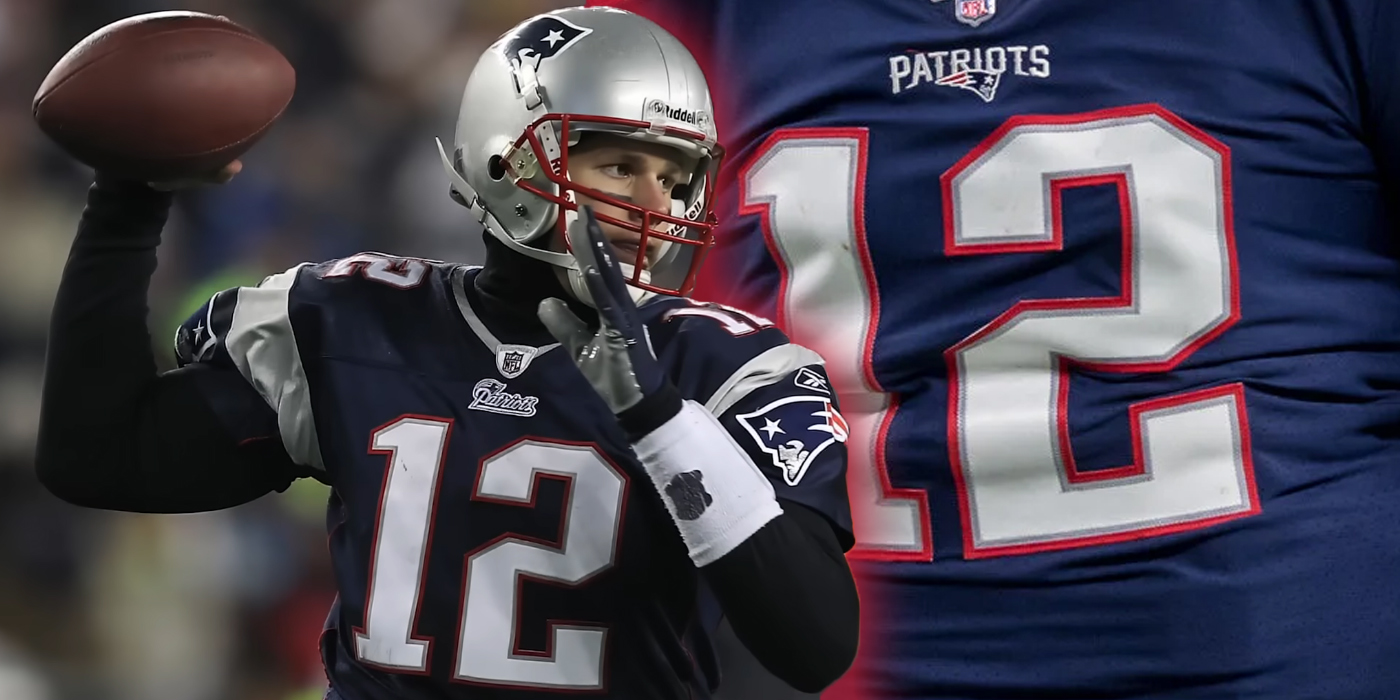
There was once a quarterback in New England who seemed to understand this equation rather well. No. 12. Sixth-round pick from Michigan. You probably remember him…
From 2013 through 2019, Tom Brady reportedly never ranked among the NFL’s top 10 quarterbacks in average annual contract value. During those seven seasons, New England appeared in four Super Bowls and won three of them.
Coincidence? Maybe. But the quarterback who shall not be named also publicly acknowledged the economics involved.
The NFL operates with a salary cap. More money committed to one player inevitably means less money available for someone else. No. 12 understood that maintaining a strong supporting cast had value of its own.
There is an important distinction here. Average annual contract value isn’t the same measurement as a single-season cap hit. Contract restructures can also move cap charges between seasons without actually reducing how much money a player receives.
That wasn’t charity. It was roster construction.
There is an important distinction here. Contract restructures can move cap charges between seasons without actually reducing how much money a player receives. The lesson isn’t that quarterbacks should simply volunteer to make less money.
The lesson is that contract structure and cap allocation have consequences.
For a quarterback, maximizing salary and maximizing championships aren’t necessarily the same objective.
What Do NFL Quarterback Contracts Really Cost?
None of this means NFL quarterback contracts have become inherently bad investments. Quarterbacks play the most influential position in professional football, and their salaries reflect both their importance and scarcity.
However, raw salary figures don’t tell us whether a quarterback’s contract is good for his football team. Ultimately, evaluating NFL quarterback contracts requires looking at how much of the available salary cap each player consumes.
A young quarterback consuming 3% of the cap provides his organization tremendous flexibility. An established quarterback consuming 15% has to provide something different: he has to elevate the players the team can still afford.
That’s the ruthless economics of the NFL salary cap.
The question isn’t whether a quarterback deserves $50 million. It’s whether he’s valuable enough to overcome everything his roster can no longer afford once you give it to him.
If you were building an NFL roster, would you rather have a good young quarterback consuming 3% of the salary cap or an elite veteran consuming 15%?
Next: Sean Mannion Eagles Offense: Can He Unlock Its Potential?

[…] The Cowboys don’t lack recognizable talent. Dak Prescott remains behind centre with CeeDee Lamb, George Pickens and Jake Ferguson giving him an established group of targets. Tyler Smith anchors an offensive line that should give Prescott enough support to make the offence dangerous. […]