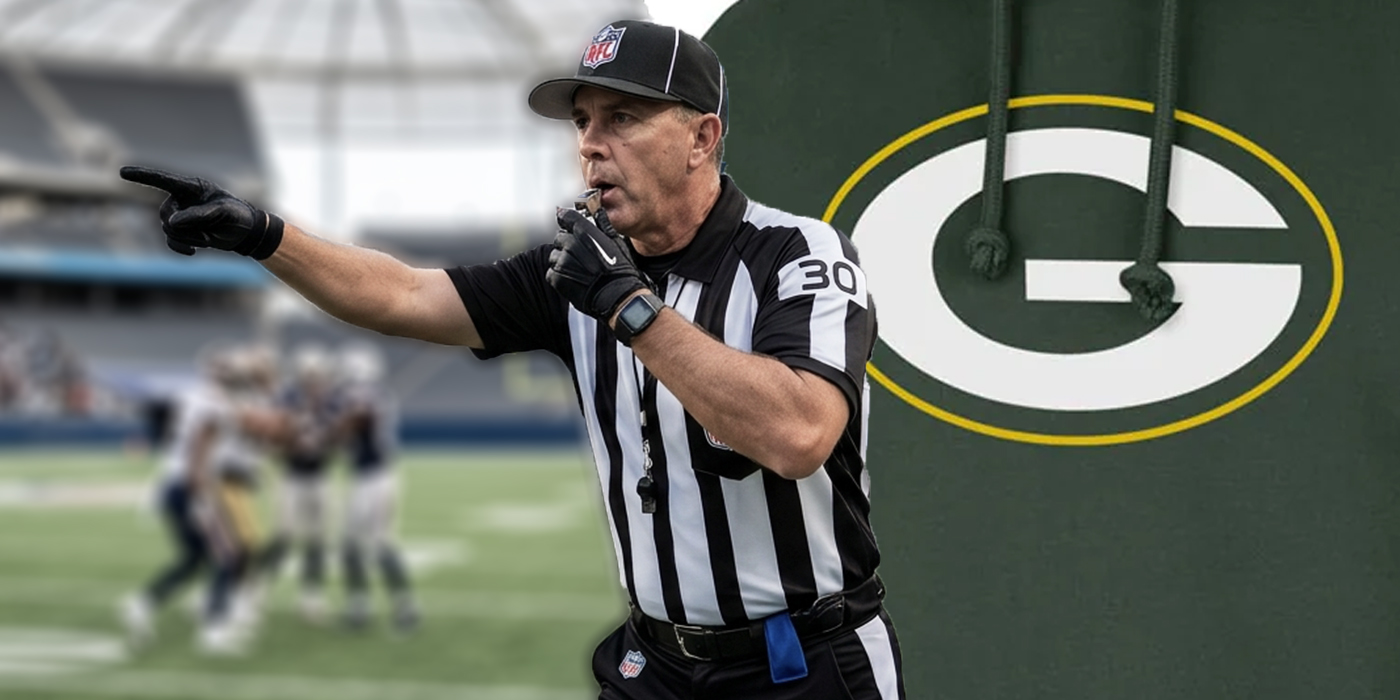
Green Bay Packers fans wanted an explanation after Sunday’s 20-17 loss to the Detroit Lions. They got one from referee Alex Moore, but his comments left room for the very question that made the controversial penalty so frustrating in the first place.
Did Devonte Wyatt know the play was over? With 7:46 left in the third quarter, Detroit receiver Amon-Ra St. Brown got up after an initial tackle and appeared to keep moving. Wyatt tackled him again, drawing an unnecessary roughness penalty that helped the Lions move inside the 11-yard line. Two plays later, Jared Goff threw a touchdown pass to Jameson Williams.
Asked whether a whistle had sounded before Wyatt’s second tackle, Moore acknowledged that he couldn’t say whether a whistle had sounded before the tackle. He explained that officials had ruled the play over and considered Wyatt’s additional forceful tackle a penalty.
That’s an important distinction. The officials judged that the play had ended. Green Bay coach Matt LaFleur argued afterward that no whistle had blown and St. Brown continued running. Those two perspectives help explain why the call became such a talking point.
An Explanation Isn’t Always Closure
There’s a difference between explaining why a penalty was called and settling every concern about how it happened. Moore explained the officials’ reasoning. But his admission that he couldn’t confirm he heard a whistle doesn’t fully answer the question from Wyatt’s perspective: What was the defender supposed to recognize in that moment?
Players make decisions in fractions of a second. If a defender believes a receiver is still moving with the ball, there can be a fine line between finishing a tackle and making unnecessary contact after the play has ended. That doesn’t automatically make Wyatt right. Nor does it mean the officials made the wrong decision. It does help us understand why the Packers might have viewed the situation differently.
Moore also explained the intentional grounding penalty against Jordan Love, which cost Green Bay 11 yards early in the fourth quarter. The Packers had other problems, too, including two missed field goals by Trey Smack.

Green Bay Has More to Consider
After a three-point loss, it’s tempting to focus on the decisions that might have changed the outcome. Fans do it because they care, and because a close game invites us to imagine how things might have unfolded differently. But Green Bay can’t control how the next disputed call will be interpreted. It can control how it responds, how it handles pressure and whether it takes advantage of the opportunities it gets.
The Wyatt penalty mattered. So did the missed kicks and the interception that followed Love’s grounding penalty. For Packers fans, Moore’s comments may not provide the satisfying answer they wanted. They do, however, offer something useful: a clearer understanding of the officials’ reasoning, even if questions remain about what happened on the field.
Sometimes an explanation settles the matter. Sometimes it simply helps us understand why people saw the same play so differently.