Odell Beckham Jr.’s return to the New York Giants lasted three games. In hindsight, the surprising part might be that the reunion happened at all.
The Giants released Beckham this week after the 33-year-old receiver barely saw the field and failed to record a catch. Head coach John Harbaugh didn’t point to an injury, locker-room problem or dispute behind the scenes. His explanation was considerably simpler: New York wasn’t getting enough production from the roster spot. Beckham played only 20 offensive snaps and received one target.
That sounds brutal for one of the most recognizable Giants of the past decade. It also makes considerably more sense when you look at what New York’s offense has become.
This isn’t the Giants offense Beckham left years ago. New York has been transformed into a physical, blood-and-guts team built around multiple running backs, heavy personnel and a 300-pound fullback. Beckham came home. The Giants had already moved on.
Odell Beckham Jr. Was Fighting for a Shrinking Role
The problem wasn’t simply that Beckham had fallen behind Malik Nabers and New York’s other receivers. There are only so many offensive snaps available, and Harbaugh’s Giants are choosing to spend a significant number of them with fewer receivers on the field.
Patrick Ricard is perhaps the clearest symbol of the change. While the classic fullback position is making more appearances in NFL offenses, Ricard’s abuse of linebackers at roughly 300 pounds is near criminal. The veteran fullback gives New York the ability to build formations that can look more like short-yardage packages than conventional NFL offense. Put Ricard in the backfield with Cam Skattebo and suddenly the defense has to prepare for a very different kind of football.
That was part of the plan from the beginning. Before the season, the Giants themselves identified Ricard, Skattebo and Greg Roman’s history of productive running games as indications that New York intended to lean heavily on the ground attack.
The Giants aren’t simply lining up and trying to overpower people, either. They can use that personnel to attack downhill before shifting, motioning and changing the formation before the snap. It can create considerable complexity for a defense while allowing New York to maintain its physical identity.
There is an unavoidable consequence for the receiving room. Every snap featuring a fullback or an additional tight end is potentially a snap without a third or fourth receiver on the field.
For Beckham, that created a difficult equation. He wasn’t going to displace Nabers, and New York had other receivers ahead of him in the rotation. When the Giants did put multiple receivers on the field, Beckham still struggled to find opportunities.
A fourth receiver can have considerable value in the modern NFL. That value becomes harder to find when the offense frequently wants to put fewer receivers on the field.
The Giants Couldn’t Find a Job for Beckham
That’s ultimately what makes this story more interesting than Beckham simply losing a step. Harbaugh acknowledged that the Giants couldn’t find enough opportunities for him. Beckham wasn’t creating problems or demanding the football. According to Harbaugh, he handled the situation professionally and the coaching staff simply couldn’t make it work.
The Giants couldn’t find a reason to play him.
That’s a remarkably strange position for Beckham to occupy in New York. During his original Giants tenure, he was the offense. He became one of the most recognizable players in football and produced some of the most spectacular moments the franchise has had over the past decade.
This time, Beckham played only 20 offensive snaps in three games and received one target.
He also offered limited value on special teams, which becomes increasingly important as a receiver moves down the depth chart. A player receiving regular targets doesn’t need to justify his roster spot with grunt work like covering kicks. A fourth or fifth receiver does.
That left New York carrying a veteran receiver who wasn’t playing much offense, wasn’t getting the football and wasn’t filling a significant special-teams role. Nostalgia can sell jerseys, but it doesn’t create another spot on a 53-man roster.
New York’s Quarterback Problems Made the Fit Even Worse
Then the Giants lost Jaxson Dart.
Dart’s knee injury dramatically changed the trajectory of an offense that had looked surprisingly sophisticated early in the season. The young quarterback appeared increasingly comfortable handling motion, formation changes and checks at the line of scrimmage before his season abruptly ended. He will miss the remainder of the regular season, although Harbaugh has not completely ruled out a postseason return.
New York subsequently acquired J.J. McCarthy from Minnesota for a 2027 fifth-round pick, adding another young quarterback who must learn an unfamiliar offense after the season has already started. For now, Harbaugh has made it clear that Jameis Winston remains the starter.
That quarterback uncertainty doesn’t necessarily make Beckham more valuable. It may do the opposite.
When a team loses its starting quarterback and introduces another quarterback to the system during the season, leaning on the established running game becomes increasingly attractive. New York already has the personnel to do exactly that.
Skattebo provides the bruising running style, Ricard gives the Giants a massive lead blocker and the offense is already constructed to operate from heavier personnel. That’s a much easier foundation to lean on than expanding the passing game specifically to manufacture touches for a receiver who wasn’t involved when Dart was healthy.
Beckham needed the passing game to create a role for him. The Giants suddenly had even less reason to do it.
Why Odell Beckham Jr. No Longer Fit the Giants
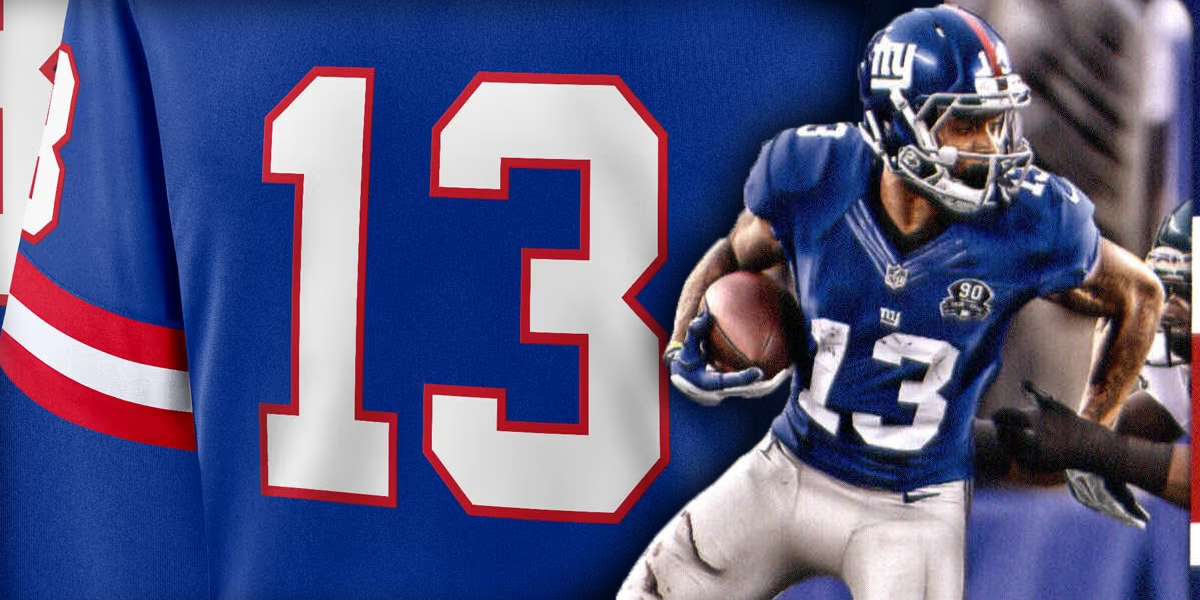
There is something disappointing about the way Beckham’s second stint in New York ended. He returned to the franchise where he became a superstar, reclaimed No. 13 and earned a place on the roster after sitting out the 2025 season. Three games later, the reunion was over without a single reception.

It would be easy to frame that as evidence Beckham simply can’t play anymore. At 33 and coming off a year away from football, it’s certainly reasonable to wonder how much he has left. But 20 offensive snaps and one target aren’t enough to answer that question.
They may answer a different one.
The Giants are taking on the persona Harbaugh established for years in Baltimore: a physical running attack designed to minimize mistakes and complement a strong defense. That doesn’t make receivers irrelevant. It makes it difficult to manufacture playing time for a fourth receiver simply because his name is Odell Beckham Jr.
Harbaugh’s decision was unsentimental, but NFL roster construction usually is. The Giants brought Beckham back hoping there was still a role for him.
There wasn’t.
Odell Beckham Jr. didn’t necessarily fail the Giants. He returned to a Giants offense that no longer had much use for Odell Beckham Jr.
Next: What Is Going on With Puka Nacua? Latest Injury Updates